
Connecticut’s public college governing board is facing new questions about how it preserves official communications after WFSB reported that members used non-state email accounts to discuss leadership controversies.
The station’s October 27 investigation described an October 2024 message from then-chair Marty Guay directing press inquiries about former Chancellor Terrence Cheng’s spending to him. WFSB said Guay sent it from his employer’s account and that seven recipients also used non-state addresses; two used official regents addresses.
WFSB also examined messages obtained through an April records request concerning former interim Chancellor John Maduko’s resignation. The station said company branding appeared in some Guay messages, while the account used was not always apparent. Eastern CT News has not independently obtained those emails.
The issue affects access to the work of a board that sets tuition and fee policies and oversees the Connecticut State Colleges and Universities system, including Eastern Connecticut State University. The system’s official website lists four state universities, CT State Community College and Charter Oak State College.
Connecticut’s Office of the Public Records Administrator advises officials against private email accounts for government business. Its General Letter 2009-2, still linked from the state’s current records-management page, explains that messages concerning public business are public records and that retention depends on their contents rather than their electronic format. That guidance does not establish that a particular regent withheld or destroyed records.
In a response published by WFSB, board spokesperson Sam Norton said volunteer regents are encouraged to use state accounts and that fall training will reinforce their Freedom of Information Act responsibilities. WFSB reported that Guay had not responded to its request for comment.
The system’s separate accountability dashboard includes a Board of Regents onboarding and training initiative, with January 2027 listed as its expected completion. The page describes continuing governance training; it does not establish that the email-access questions have been resolved.
This AI-prepared report draws on WFSB’s investigation, the state’s original email guidance and CSCU’s public pages. The underlying correspondence and completeness of responses to records requests were not independently verified.
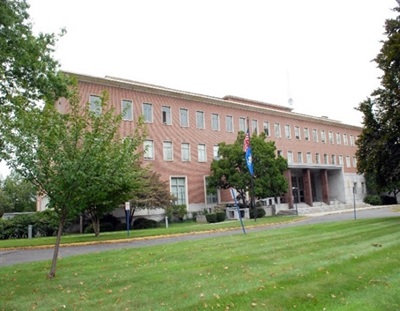
Photo: The state’s facilities file photograph of 61 Woodland Street in Hartford, which houses CSCU. Credit: Connecticut Department of Administrative Services; photographer not identified. It does not depict a current board meeting or the emails described.